- Learning Lounge
- Research in Action
18/09/2026
How to Deliver a Council-Wide Approach to Improving Literacy
A council-wide approach to literacy can be simple to describe and far more complex to deliver. The ambition may be a shared entitlement available to every pupil in the authority. Turning that ambition into practice involves schools and early years settings with different priorities, established approaches and local contexts.
The challenge is finding an approach that creates greater consistency across the authority while recognising what is already working well in individual settings.
Pupil Equity Funding is allocated directly to schools. Head teachers use their professional judgement and work in partnership with their local authority when deciding how it should be used. That is deliberate, and it is a strength, because it lets funding respond to a school's own context rather than to an average. It also means that the literacy resources available can vary according to local needs, existing provision and funding decisions. Over a few years, this can result in different levels of access across an authority.
Nationally, 74.0% of pupils achieved the expected level for literacy across P1, P4 and P7 combined in 2023-24, the highest figure on record. The national figures also show continued variation between local authorities, with writing showing the greatest variation across the primary literacy organisers.
Alongside this national picture, local authorities may also want to consider how access to literacy provision differs between their own settings. Some differences will reflect deliberate choices about practice; others may be the result of what individual settings have been able to fund.
Separate the Entitlement from the Practice
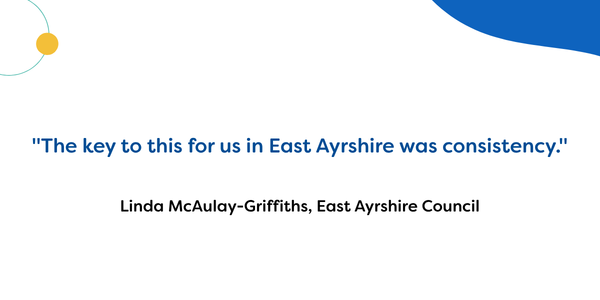
Consistency is what makes a council-wide approach worth doing. It is also important to be clear about what consistency means in practice. A shared entitlement does not need to mean a standardised approach in every setting. The distinction is between entitlement and practice.
A consistent entitlement means every setting has access to the same provision, whatever its role, its funding position or its catchment. Practice stays local. When it is used, how it sits in the timetable, which groups it supports and how it connects to what a school already does well are decisions for the people in the building.
Being clear about this distinction from the outset can help build confidence in the approach. It reassures settings that a shared entitlement is intended to expand access, while continuing to respect their professional judgement and local context.
Shape the Approach With the People Who Will Deliver It
Early involvement from the people who will deliver the provision can help ensure that an authority-wide approach works across different settings. This could include head teachers, heads of early childhood centres, central officers and colleagues from services beyond education. Giving these colleagues an opportunity to shape the rollout can identify practical considerations before implementation begins.
Each group will bring a different perspective. Early years and secondary colleagues may identify entirely different needs with the same resource. Community learning colleagues may also highlight opportunities to support learners and families beyond school settings.
One thing worth building in at that stage is the support for transitions. A rollout organised sector by sector may not always provide continuity as learners move between settings. Bringing colleagues from different sectors together can help identify how access and support will continue at these transition points.
How ILT Education UK Can Help
An authority-wide agreement can reduce the effect of differences in individual school budgets by establishing shared access across participating settings.ILT Education UK's range is designed to be deployed at that scale, across early years, primary, secondary, additional support needs provision and adult learning. Polylino supports early years settings with books that can be listened to and read in more than 68 languages. Giglets provides curriculum-aligned texts and tasks across primary and secondary. Nessy offers structured, research-based programmes supporting reading, spelling and related learning needs, including dyslexia. Aski Raski supports older learners developing foundational literacy skills.
Our team works with local authorities to understand their existing provision, bring the right people into the conversation and develop an approach that reflects local priorities. Support continues beyond the initial rollout, helping settings embed the resources in ways that work for their learners.
If you are considering a council-wide approach, a useful starting point may be to explore where differences between settings reflect choices about practice and where they result from differences in access.
Hear how East Ayrshire Council created greater consistency while respecting local practice in our authority partnership video.
More Research in Action
How Local Authorities Can Judge Value For Money in Literacy Investment