- Learning Lounge
18/09/2026
Why a Clear Literacy Strategy Matters for Local Authorities
Literacy is embedded in improvement planning across Scotland. It is a standing priority within the National Improvement Framework; attainment is measured at P1, P4 and P7, and the results are published nationally.
Fewer authorities have a literacy strategy in the fuller sense, meaning a single connected line that runs from that national priority, through the council's own plans, down to what a child has in front of them on a Tuesday morning in P4. For local authorities, the challenge is connecting that national priority with council plans, individual settings and, ultimately, what learners experience in the classroom.
A clear connection between each level can help literacy improvements become embedded and continue beyond an individual initiative or funding cycle.
From National Priority to Classroom Practice
The National Improvement Framework names improvement in attainment, particularly in literacy and numeracy, as one of its priorities. That gives every authority a starting point, but it still needs to be translated into plans and practice across local settings. East Ayrshire Council provides one example of how these different levels can be connected. Its Education Service Improvement Plan for 2024 to 2027 is aligned directly with the National Improvement Framework and the council's own community planning, and sets out 4 priorities covering leadership, learning, wellbeing and belonging, and attainment.
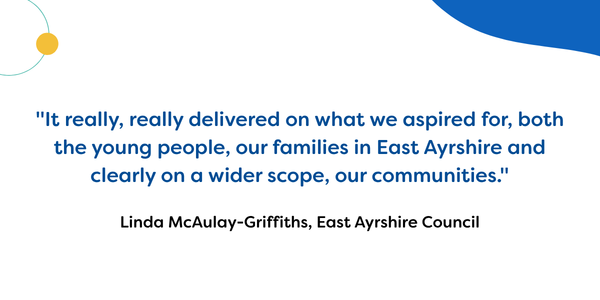
It sets out four priorities covering leadership, learning, wellbeing and belonging, and attainment. Each school and early childhood centre then develops its own plan within that wider direction. Linda McAulay-Griffiths, who leads education in East Ayrshire, describes the connections between national priority, council plan and service direction as easy to see. This reflects the work undertaken to align the different plans and create a clear direction across the authority.
This alignment also provides continuity. Staff and funding arrangements may change, but a commitment set out in a three-year plan and reflected across different levels of planning has a stronger foundation for the longer term.

Connect the Measures to the Strategy
A connected strategy also provides an opportunity to agree how progress will be measured from the outset.
East Ayrshire Council’s published plans include stretch aims covering literacy and numeracy at P1, P4 and P7. These consider both overall attainment and the poverty-related attainment gap, connecting the wider ambition with measures that can be reviewed over time.
Looking at overall attainment alongside the poverty-related attainment gap provides a fuller picture of progress. It helps an authority understand not only whether outcomes are improving overall, but whether that improvement is reaching learners across different communities.
Connect Literacy With Wider Council Priorities
A connected literacy strategy can also create opportunities beyond schools and early years settings.
East Ayrshire began with schools and early childhood centres. The programme then extended to additional support needs provision, community learning and development, adult learners, and young adults and adults with English as an additional language. Working with services beyond education helped the authority reach learners across the wider community.
For authorities considering a similar approach, involving colleagues from community services, employability and family learning at an early stage can help identify where literacy support could have a wider impact. Each service brings a different understanding of local needs and the communities that could benefit.
How ILT Education UK Can Help
Where a literacy strategy reaches from early years into adult learning, connected provision can help support learners across different ages, needs and transition points.
ILT Education UK's range is designed to support that breadth of provision. Polylino supports early years settings with books that can be listened to and read in more than 68 languages. Giglets provides curriculum-aligned texts and tasks across primary and secondary. Nessy offers structured, research-based programmes supporting reading, spelling and related learning needs, including dyslexia. Aski Raski is designed for older learners who need to develop foundational literacy skills.
Our role extends beyond providing the products. We work with local authorities to understand their priorities, connect provision with their wider plans and support implementation across different settings and services.
If you are reviewing how literacy is planned across your own authority, it may be worth considering whether the resources available to each setting are as connected as the strategy above them.
Hear more about how East Ayrshire Council connected its literacy goals across education and the wider community in our authority partnership video.
More Research in Action
How Local Authorities Can Judge Value For Money in Literacy Investment