- Learning Lounge
18/09/2026
Partnership in Action: What Local Authorities Should Look for in a Literacy Partner
Choosing a literacy partner across an entire local authority is a significant commitment. The provision needs to work in multiple settings, for different learners and staff, long after the initial demonstration.
The initial decision may be based on the strength of the product, but the quality of the ongoing support can play an equally important role in its long-term success. This is where the difference between a supplier and a genuine partner becomes clear. The product may meet the brief, but without effective implementation, training and ongoing support, schools can struggle to make it part of an already full week.
Four questions can help local authorities understand what the partnership will look like in practice.
1. What Does the First Term Look Like?
A demonstration can show what a product is capable of. The next step is understanding how the supplier will help embed it across settings with different needs, priorities and starting points. The Education Endowment Foundation puts this plainly in its guidance on implementation: "It doesn't matter how great an educational idea or intervention is in principle; what really matters is how it manifests itself in the day-to-day work of people in schools."
The more useful questions therefore focus on weeks 3 to 12. What will happen after the initial launch? How will support be coordinated across settings? If a school has not been able to get started by half term, how will the supplier help? An authority-wide commitment involves a large number of settings getting started at the same time. Ask whether the supplier has managed an implementation at that scale, what challenges arose, and how they responded.
2. How Will You Support Different Levels of Digital Confidence?
Across an authority, staff confidence with a new platform can vary considerably, and not always in the way the central team anticipates. A single launch session may be enough for confident users, but other staff may benefit from additional support.
It is therefore important to understand what ongoing support is available. Is training available beyond the initial launch? Are there network meetings that bring staff from different settings together so they can share useful practice? Is there accessible support when staff have questions or experience a problem? This matters because central authority teams may not have the capacity to provide day-to-day support across every setting. A strong partnership should give schools access to the help they need without placing all responsibility for ongoing product support on the authority’s central team.

3. How Will the Supplier Work With Your Central Team?
An authority-wide rollout needs clear communication between the supplier and the central team. Without it, individual queries and challenges can quickly become another task for authority staff to coordinate.
Ask who will manage the relationship after the initial rollout. Will there be a named contact who understands the authority’s priorities and context? How often will you review what is working, where schools may need more support and whether the approach needs to adapt?
The strongest partnerships create space for honest conversations rather than waiting for a formal review. The supplier should listen to feedback from the central team and individual settings, respond when needs change and help resolve challenges before they become barriers. This makes the relationship easier to manage and gives the authority confidence that support will continue beyond the launch.
4. Can We Speak to Another Local Authority?
A prospective partner should be able to connect you with another local authority that has experience of working with them. The value comes from hearing about the full experience - not only what worked well, but also the challenges encountered and how the supplier responded.
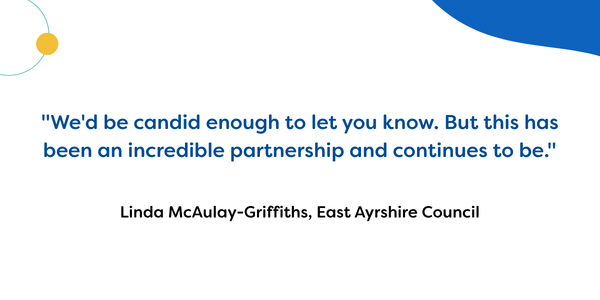
A peer authority can also provide insight into how the scope of the partnership developed over time. In East Ayrshire, what began with a particular focus grew to support a wider range of learners and services:
"Very, very quickly it becomes incredibly apparent that it is so much more than that."
Linda McAulay-Griffiths, East Ayrshire Council
Speaking to another authority provides an opportunity to understand how the partnership works in practice. Ask for specific examples of how the rollout was managed, what ongoing support looked like and how the relationship developed over time. This gives you something more useful than general praise: a clearer picture of what working with the supplier could look like across your own settings.
A conversation with a peer authority can also reveal the wider reach of the provision. What begins with a focus on digital books, for example, may extend into additional support needs provision, community learning, adult literacy and support for learners with English as an additional language.
Hear more about East Ayrshire Council’s experience of working with ILT Education here.
How ILT Education UK Can Help
ILT Education UK supports local authorities with more than just the product itself. This includes onboarding across settings, training that continues beyond launch, network meetings between schools and usage information that helps central teams understand engagement across the local authority, as well as opportunities for staff to share their experiences and learn from one another. Central teams also have a named point of contact, helping to maintain clear communication and coordinate support as the partnership develops.
Our product range supports learners across different ages and areas of need. Polylino provides early years books in more than 68 languages; Giglets supports literacy across primary and secondary settings; Nessy offers structured, research-based programmes supporting reading, spelling and related learning needs, including dyslexia; and Aski Raski helps older learners develop foundational literacy skills.
Speak to our team about how ILT Education UK can support literacy provision across your authority.
More Research in Action

How Local Authorities Can Judge Value For Money in Literacy Investment