How Bamble Municipality succeeds with early literacy education and equitable schooling
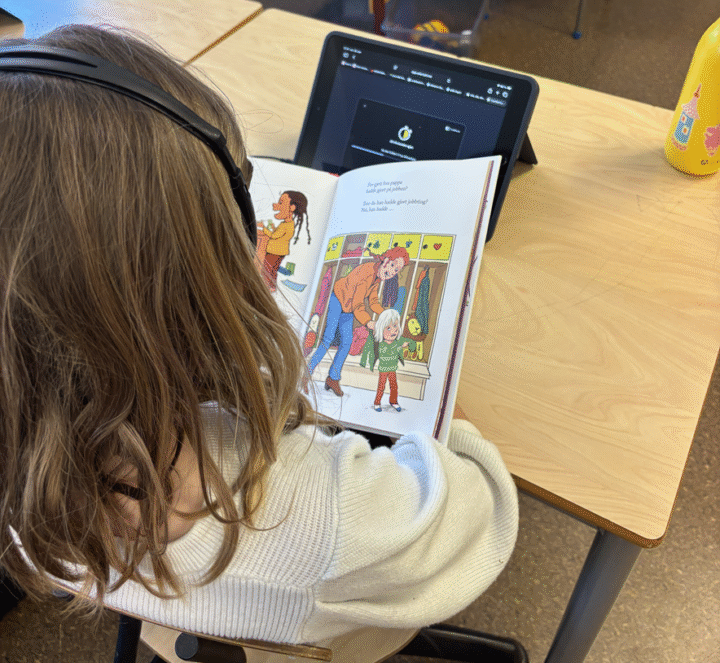
How can schools ensure that all pupils learn to read early in their education, regardless of which school they attend?
For Bamble Municipality, the answer was a targeted investment in structure, systematic practice, and Aski Raski.
We spoke with Øyvind S. Hansen, Educational Advisor and Project Manager in Bamble Municipality, about why they chose Aski Raski as a central part of their reading strategy, how they have approached the screen-time debate, and what they have learned through the implementation process.

Øyvind S. Hansen,
Educational Advisor / Project Manager,
Bamble Municipality.
A Systematic Approach in Bamble Schools
Why did you choose to use Aski Raski?
“We chose to implement Aski Raski because we needed to strengthen the systematic work with early reading instruction in Bamble schools,” Hansen explains.
“Aski Raski appeared to be a targeted and research-based tool that supports teachers in developing phonemic awareness, decoding skills, and reading fluency, while also providing strong opportunities for assessment, follow-up, and adaptation.”
Hansen emphasizes that the municipality also placed great importance on ensuring that the solution became part of a holistic pedagogical practice. The goal is to combine digital and analogue methods, while always keeping the teacher’s professional judgement at the centre.
How does the tool fit into the municipality’s strategies and plans?
In Bamble schools’ development plan, basic skills are one of five priority areas, with a particular focus on reading. Leadership of learning is also a dedicated strategic area, with clear expectations regarding structure, systematic practice, and professional collaboration.
“Furthermore, Aski Raski is well anchored in the municipality’s own reading plan for Bamble schools. The reading plan emphasizes early intervention, systematic follow-up, and adapted education, particularly in beginner reading instruction. Here, Aski Raski functions as a practical and targeted tool for translating the plan’s intentions into concrete classroom practice,” Hansen explains.
The Goal: Early Intervention and Equal Opportunities
The municipality’s overall goal is twofold: identifying challenges early and ensuring that all schools provide the same high quality of instruction.
Preventing Academic Difficulties
Ensuring that more pupils develop strong and functional reading skills early by strengthening decoding, fluency, and comprehension before challenges become long-term.
Equal Education
By establishing a shared approach to foundational reading instruction across the municipality, the risk of quality becoming dependent on individual teachers or random variation is reduced.
“When challenges are identified early, schools are in a much stronger position to implement targeted interventions before difficulties become persistent or intensify.”
— Øyvind S. Hansen, Bamble Municipality
Pedagogical Use in a Time of Screen-Time Debate
At a time when digitalisation in schools is frequently debated, Bamble Municipality has developed a reflective approach to the use of educational technology.
“We understand and take the screen-time debate seriously. For us, it is important to be clear that the use of Aski Raski is not about more screen time in itself, but about more targeted and pedagogically grounded use of digital tools,” says Hansen.
He explains that the key question is not screen versus no screen, but rather how, when, and why technology is used:
- Structured and limited use: The tool is specifically used for phonological awareness and decoding.
- Closely connected to the teacher: The use of the tool is integrated with teacher-led instruction, assessment, and follow-up.
Success Factors for Effective Implementation
Bamble Municipality has been conscious that implementing a new programme should not become an isolated initiative. They have supported the implementation on three levels: organisational, pedagogical, and leadership-related.
1. Anchoring in Strategic Plans
Aski Raski was written directly into the reading plan as a recommended and accessible assessment and follow-up tool across several grade levels.
2. Professional Development and Knowledge Sharing
The tool has been a recurring topic in leadership meetings, principal meetings, and professional development sessions. Courses and workshops have also been conducted in collaboration with the provider (Aski Raski / ILT Education), aimed at both school leaders and teachers.
3. Continuous Dialogue
The municipality has maintained long-term focus through systematic discussions about reading development and adapted education. They have also built on experiences from Langesund Primary School, which was an early adopter in systematising the use of the tool.
Looking Ahead: What Have They Learned?
Although the implementation has been successful, it has also been a learning process. When asked what they would do differently if they started again today, Hansen highlights the importance of clear expectations from the very beginning:
“We would have been even clearer about what Aski Raski is intended to be — and what it is not intended to be. It is crucial to establish early that the tool should be part of a comprehensive reading instruction approach, and not used randomly or in isolation.”
He adds that they would also have introduced more structured routines for interpreting assessment data and making pedagogical decisions earlier in the process.
“At the same time, this has been an incredibly valuable and educational process. The experiences we have gained, both at the school-owner level and within schools themselves, have strengthened both the use of the tool and the municipality’s overall work with reading,” Hansen concludes.
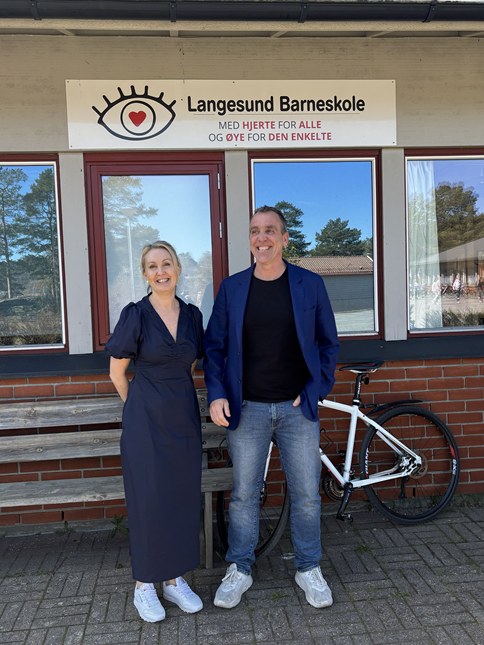
Principal Kenneth Broch Johnsen and reading teacher Lillann H. Hansen at Langesund Primary School, who have worked purposefully to strengthen the systematic approach to early literacy education
Start your 30-day free trial!!
Sign up today and try our services.